
AI isn’t about productivity. It’s about presence.
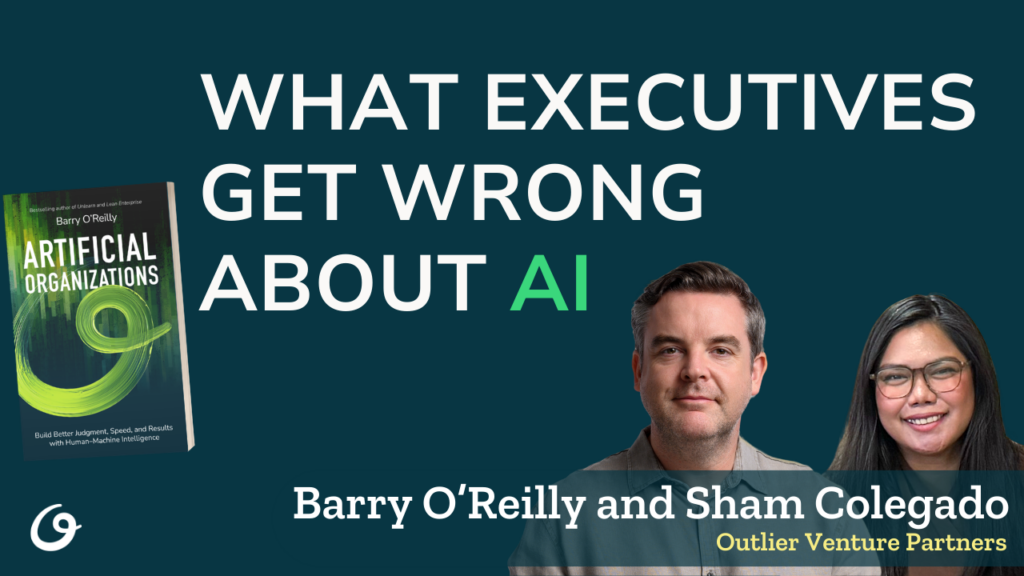
In this special episode on AI decision making for leaders, the tables turn and I’m interviewed by Sham Colegado about my new book, Artificial Organizations. We explore why 95% of AI projects fail, why executives don’t want more tools — they want their life back — and how the real competitive edge isn’t automation, but judgment at speed.
If you’ve been overwhelmed by the explosion of AI tools or unsure where to start, this episode will help you reframe the conversation. This isn’t about doing more. It’s about deciding better — faster, with clarity and confidence — by combining human instinct with machine intelligence.
Subscribe


Key Takeaways
- AI Used Only for Productivity Fails: When AI is treated as a cost-cutting tool instead of a transformation system, it rarely creates lasting value.
- Presence Is the Real Advantage: The goal isn’t more output. It’s showing up calmer, clearer, and better prepared — so decisions improve.
- Decision Velocity + Decision Advantage Wins: Make decisions faster and with better information. Speed without clarity is noise. Clarity without speed is stagnation.
- The Future Belongs to Human + Machine Judgment: Executives who combine instinct with machine intelligence will outperform those relying on either alone.
Additional Insights
- Executives Don’t Want More Tools — They Want Their Life Back: Leaders aren’t overwhelmed by lack of tools. They’re overwhelmed by fragmented workflows, constant context switching, and decision fatigue. AI must reduce cognitive load, not add to it.
- Presence Drives Performance: When AI handles capture and synthesis, leaders show up calmer, more prepared, and more focused. Productivity improves — but performance and clarity are the real unlock.
- The Identity Threat of AI: Many executives privately fear incompetence. They don’t want to look behind or uninformed. That hesitation often shows up as skepticism or avoidance.
- Decision Velocity Is the New Differentiator: Artificial organizations move faster because they reduce decision latency. Meetings become focused. Context is pre-loaded. Choices are made with confidence.
- Traits + Tasks + Tools (T3 Model): Start with how you naturally work best. Then amplify your highest-leverage tasks with the right tools.
- Capture, Transcribe, Synthesize, Act: A simple workflow that turns every conversation into a reusable data asset. This loop compounds judgment and accelerates learning over time.
Episode Highlights
00:00 – Episode Recap
Barry explains why AI used purely for productivity fails — and why the real advantage comes from transforming how leaders make decisions.
02:58 – Guest Introduction: Sham Colegado
Barry welcomes Sham Colegado, a key member of the Artificial Organizations team, who interviews Barry about the book and its core ideas.
03:32 – “Executives Don’t Want More AI Tools”
Barry shares the personal burnout moment that sparked a shift from productivity chasing to rethinking how he works.
06:02 – AI’s Real Promise: Presence Over Productivity
Why performance and clarity matter more than output — and how AI can make leaders calmer and more focused.
09:30 – The Identity Threat of AI
Executives reveal a hidden fear of incompetence and why one-on-one learning environments matter.
12:26 – Decision Velocity & Decision Advantage
The two engines of artificial organizations and how reducing decision latency compounds competitive advantage.
15:15 – The Traits, Tasks, Tools Flywheel
How aligning natural strengths with high-leverage work determines which AI tools actually create impact.
19:01 – What the Best AI Adopters Do Differently
Curiosity, experimentation, and comfort with discomfort separate leaders who accelerate from those who stall.
22:46 – The First Workflow to Build
Capture → Transcribe → Synthesize → Act — a simple loop that transforms meetings into strategic assets.
26:05 – The Executive of the Future
The most valuable leaders won’t rely on instinct alone — they’ll pair judgment with machine intelligence to make better decisions faster.
FAQs
Q1: Why do most AI projects fail inside companies?
Barry explains that AI efforts often fail when they focus on productivity and cost savings instead of improving decision quality and performance, leading many initiatives to deliver little or no measurable value.
Q2: What is decision velocity and why does it matter?
Decision velocity is how frequently and quickly leaders make decisions, and Barry pairs it with decision advantage—having the right information to decide confidently—as a key competitive edge.
Q3: What does “presence over productivity” mean in AI adoption?
Barry describes presence as the ability to show up calmer, clearer, and more focused because AI can capture, transcribe, and synthesize information, improving meeting performance and follow-through.
Q4: What’s a simple way for leaders to start using AI without getting overwhelmed?
Barry recommends starting with a “Capture → Transcribe → Synthesize → Act” loop using a key meeting or conversation, then using AI to summarize, generate follow-up actions, and improve future decisions.
Q5: What will differentiate the most valuable executives in the age of AI?
Barry argues the most valuable executives will pair human instinct and experience with machine intelligence, using AI as a thinking partner to strengthen judgment and make better decisions faster.