
Translating a book with AI is not as simple as asking a model to translate every page.
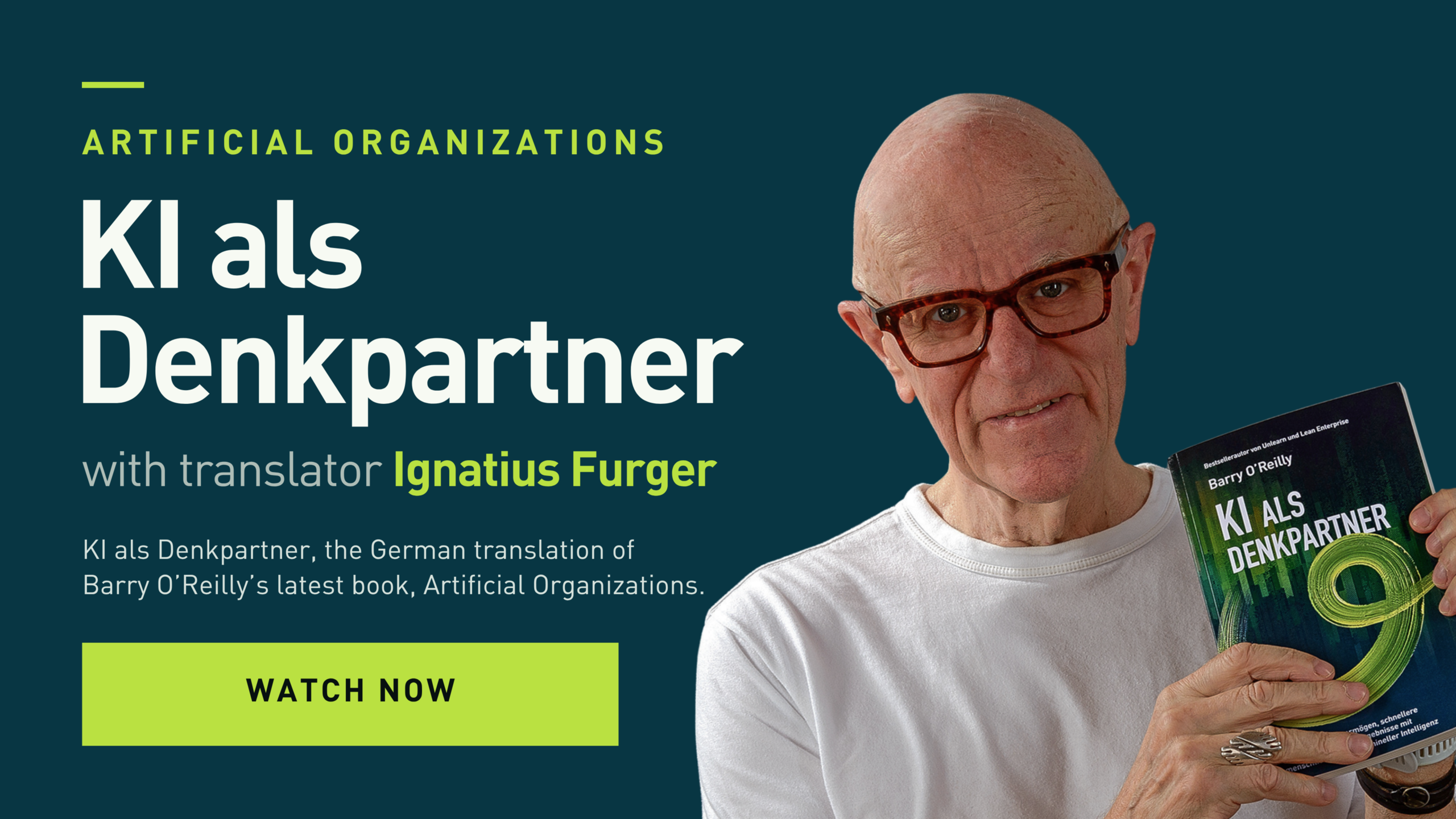
Ignatius Furger is a strategy advisor who has spent decades helping small and mid-sized companies build strategies with their people. After reading Artificial Organizations, he saw a practical framework for integrating AI into strategy, leadership, and decision-making. He went on to translate the book into German as KI als Denkpartner.
In our conversation, Ignatius and I explore why he chose to translate the book, how he used AI throughout the process, and why human judgment remained essential. We also discuss the challenge of translating concepts such as “judgment” across languages and how he is applying the book’s ideas in his strategy work with German-speaking organizations.
Key Takeaways
- AI works best as a thinking partner: Ignatius found the greatest value came from discussing, challenging, and refining language with AI rather than asking it to complete the translation independently.
- Context improves the quality of collaboration: As the translation developed, AI could compare terminology across chapters, identify inconsistencies, and make more useful suggestions.
- Human judgment remains essential: Every sentence still required review. Ignatius had to decide which wording best preserved the meaning, tone, and intent of the original.
- Translation exposes the nuance inside key ideas: The English word “judgment” required several German terms depending on whether the passage referred to forming, exercising, or applying judgment.
- AI can strengthen strategy work without replacing people: Ignatius uses AI to help teams research, develop options, challenge ideas, and make sharper decisions while keeping people responsible for the strategy.
Additional Insights
- The German title reflects the book’s central idea: KI als Denkpartner translates to “AI as a thinking partner,” emphasizing collaboration between human and machine intelligence.
- The translation process modeled the principles in the book: Ignatius combined human expertise, machine memory, iteration, and evaluation to produce the German edition.
- German-speaking organizations may be ready for a deeper AI conversation: Ignatius sees strong potential for an approach that moves beyond prompting and automation toward judgment, leadership, and organizational design.
- Strategy should remain a team activity: Ignatius argues that the people closest to customers and day-to-day work should help develop the strategy, with AI supporting rather than replacing their contribution.
Episode Highlights
00:00 – Introducing the German Edition
Barry welcomes Ignatius and reflects on what it means to see Artificial Organizations reach readers in another language.
01:37 – How Ignatius Discovered Artificial Organizations
Ignatius explains how a recommendation from Jim Highsmith led him to the book and why reading it a second time convinced him to translate it.
03:12 – Why AI Should Be a Thinking Partner
Ignatius discusses judgment infrastructure, the German title KI als Denkpartner, and the idea of people and machines thinking together.
06:00 – Why the Ideas Can Resonate in the German Market
Ignatius explains why German philosophical traditions and the needs of strategy leaders create an opening for a more thoughtful approach to AI.
08:50 – Why AI Could Not Translate the Book on Its Own
Ignatius describes the limits of automatic translation and the iterative process he used to challenge and refine each passage.
12:56 – Translating the Many Meanings of Judgment
Barry and Ignatius discuss the linguistic and contextual decisions required to translate one of the book’s most important concepts.
14:09 – Bringing the Ideas Into Strategy Development
Ignatius shares his plans for workshops, coaching, training materials, and practical examples for German-speaking organizations.
17:20 – Your People Are the Best Agents
Ignatius explains why strategy should be developed with employees and how AI can help teams research, create options, and test their thinking.
21:10 – Where to Find the German Edition
Barry encourages German-speaking readers to explore KI als Denkpartner and apply its principles in their organizations.
FAQs
Q1: Why did Ignatius Furger translate Artificial Organizations into German?
Ignatius saw the book as a practical management philosophy for working with AI. Its focus on judgment, decision-making, and collaboration between people and machines aligned closely with his work in strategy development.
Q2: What does KI als Denkpartner mean?
KI als Denkpartner means “AI as a thinking partner.” The title reflects the idea that AI should participate in a collaborative thinking process rather than serve only as an automation or research tool.
Q3: Did Ignatius use AI to translate the German edition?
Yes, but AI did not translate the book independently. Ignatius created and reviewed the translation, then used AI to debate wording, compare alternatives, check consistency, and refine difficult passages.
Q4: Why was the word “judgment” difficult to translate?
Its meaning changes depending on the context. Ignatius used several German terms to distinguish between forming a judgment, having the capacity to judge, exercising judgment, and reaching a decision.
Q5: How is Ignatius applying these ideas to strategy development?
He is integrating AI into workshops and strategy processes where teams conduct research, develop strategic options, challenge ideas, and translate their choices into objectives and key results.