
The loudest voices in AI are often focused on the latest feature, tool, or breakthrough. But getting better with AI isn’t about chasing every new release. It starts with understanding how you think, where you create the most value, and how AI can amplify those strengths.
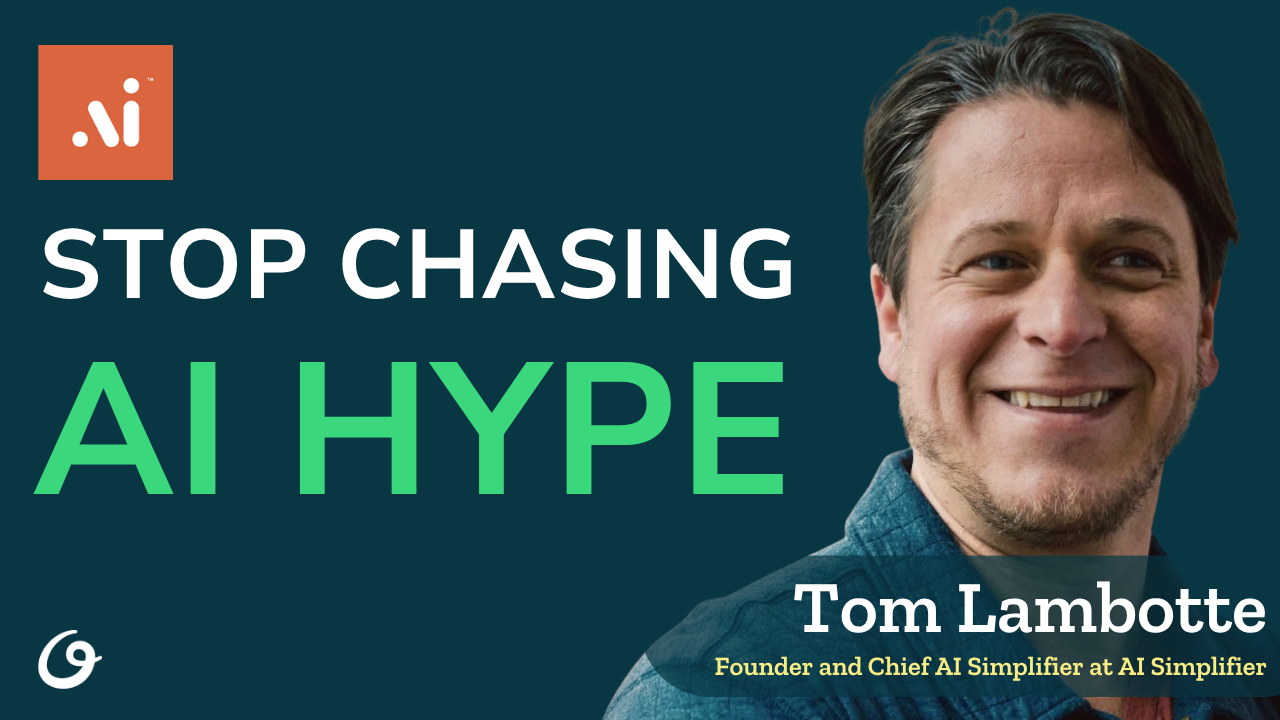
Tom Lambotte has spent years helping entrepreneurs and leaders do exactly that. As the founder of AI Simplifier, he works with entrepreneurs and executives to move beyond surface-level AI adoption and build ways of working that fit how they naturally think and operate. His approach is less about mastering every tool and more about developing the mindsets needed to use AI effectively.
In our conversation, we explore why so much AI advice creates noise instead of progress, why leaders need to stop treating AI as a replacement for human capability, and how voice can unlock entirely new ways of working. We also get into Tom’s “three circles of knowledge,” why most people are only using AI in second gear, and how AI can become a thinking partner that helps us uncover blind spots, deepen our ideas, and make better decisions.
Key Takeaways
- Stop chasing AI hype: Much of the AI content online is driven by speed, novelty, and attention rather than whether a new tool or feature actually solves real-world problems.
- Start with how you naturally work: The biggest gains can come from understanding your existing strengths and behaviors, then using AI to amplify them rather than forcing yourself into someone else’s workflow.
- Voice can unlock your thinking: Speaking can capture ideas closer to the speed of thought and reduce the friction of compressing complex thinking into typed prompts.
- Most people are only scratching the surface of AI: Using AI for emails, summaries, and existing tasks creates value, but greater leverage can come from using it to discover what you do not yet know.
- AI is an amplifier, not simply a replacement: AI can deepen original thinking, challenge assumptions, expose blind spots, and help people approach problems with greater confidence.
Additional Insights
- Leaders need to learn in the open: AI adoption becomes more approachable when senior leaders experiment themselves, share what works and what does not, and make it safe for their teams to learn alongside them.
- Find leverage instead of collecting tools: Rather than accumulating hundreds of prompts, GPTs, or applications, Tom looks for underlying patterns and strategies that can solve multiple problems.
- AI can help reveal unknown unknowns: Tom’s “three circles of knowledge” distinguishes between what we know, what we know we don’t know, and the much larger category of what we don’t know we don’t know.
- Better AI starts with better thinking: If your thinking is unclear, AI can amplify that confusion. Clear intentions, context, and perspectives make the technology more useful.
- Presence may be one of AI’s biggest leadership benefits: Using AI to capture information, prepare for important conversations, and reduce cognitive load can give leaders more headspace when judgment matters most.
Episode Highlights
00:00 – Episode Recap
Tom challenges the AI hype machine and explains why the people racing to cover every new feature may not be the people leaders should rely on to understand what actually works.
02:49 – Guest Introduction: Tom Lambotte
Meet Tom Lambotte, founder of AI Simplifier, who helps entrepreneurs and leaders move beyond simply using AI toward developing ways of working tailored to how they think.
04:59 – Why Tom Came Back to AI
After stepping away from AI, Tom found clients pulling him back in and realized his approach to AI adoption was different from the feature- and tool-driven advice dominating the market.
07:36 – Start With the Person, Not the Technology
Barry and Tom explore why effective AI adoption begins with understanding an individual’s natural behaviors, strengths, and ways of working.
11:39 – Why AI Hype Is Sending People in the Wrong Direction
Tom explains the incentives behind AI content on YouTube and why leaders need trusted filters who test new capabilities against real problems before recommending them.
14:39 – Stop Typing and Start Using Your Voice
Tom introduces voice as one of his highest-leverage AI mindsets and explains how speaking can capture ideas with greater richness and authenticity than traditional typed prompts.
16:41 – Designing AI Around Your Natural Strengths
Barry shares how recognizing talking as one of his natural behaviors helped him use transcription and AI tools to remove friction and accelerate his highest-value work.
19:17 – AI Isn’t Only for “Tech People”
Tom explains why people who do not identify as technical can struggle to enter the AI conversation and how changing the way AI is taught can give them greater confidence and agency.
23:30 – AI Adoption Has to Start at the Top
Tom argues that leaders need firsthand experience with AI before pushing adoption across their organizations because understanding what the technology can do changes how they lead its implementation.
25:03 – The Three Circles of Knowledge
Tom explains why most people use AI only for what they already know or know they don’t know, while greater transformations can come from uncovering unknown unknowns.
27:50 – Moving From Productivity to Performance
Barry explores why faster emails and summaries are only the first step and how AI becomes more valuable when it improves decisions, outcomes, preparation, and presence.
31:31 – AI Is an Amplifier, Not a Replacement
Tom challenges the obsession with replacing human work and explains how AI can instead amplify original thinking, expose blind spots, and help people tackle challenges they might never have attempted before.
36:02 – Using AI as a Thinking Partner
Barry describes how leaders can use AI to test strategies, pressure-test assumptions, prepare for difficult conversations, and arrive at high-stakes decisions with more resilient thinking.
39:11 – Compounding Small AI Wins
As Tom prepares to move his family to Costa Rica, he shares how AI has reduced the mental bandwidth required for everyday research and decisions while allowing him to keep building and innovating.
41:51 – Closing Reflections
Barry reflects on Tom’s ability to stack small AI wins into meaningful change and encourages listeners to explore Tom’s approach to putting these ideas into practice.
FAQs
Q1: Why does Tom Lambotte think people should stop following AI hype?
Tom argues that much of the AI content online is incentivized by attention. Creators benefit from covering new releases immediately and framing every feature as transformative, often before testing whether it creates meaningful value in real-world situations.
Q2: What does Tom Lambotte mean by the “three circles of knowledge”?
The first circle contains what you know. The second contains what you know you don’t know. The third, and much larger circle, contains what you don’t know you don’t know. Tom believes AI can help people explore that third circle by introducing perspectives, questions, and possibilities they would not have known to ask for themselves.
Q3: Why does Tom recommend using voice with AI?
Tom believes typing can restrict the richness and speed of our thinking. Speaking allows people to capture a fuller stream of thought and give AI more context to work with, while personalization can help AI-generated outputs better reflect how someone actually communicates.
Q4: Why should AI adoption start with senior leaders?
Tom believes leaders need to understand AI’s capabilities firsthand before asking their teams to adopt it. When leaders experiment openly and share what they are learning, they can create greater confidence and permission for others to experiment.
Q5: What does it mean to use AI as an amplifier?
Rather than focusing solely on replacing tasks or people, Tom uses AI to amplify human capabilities. That can mean clarifying ideas, examining a problem through different perspectives, uncovering blind spots, researching unfamiliar topics, and giving people greater confidence to tackle new challenges.