
When building gets easier, choosing what to build becomes even more important.
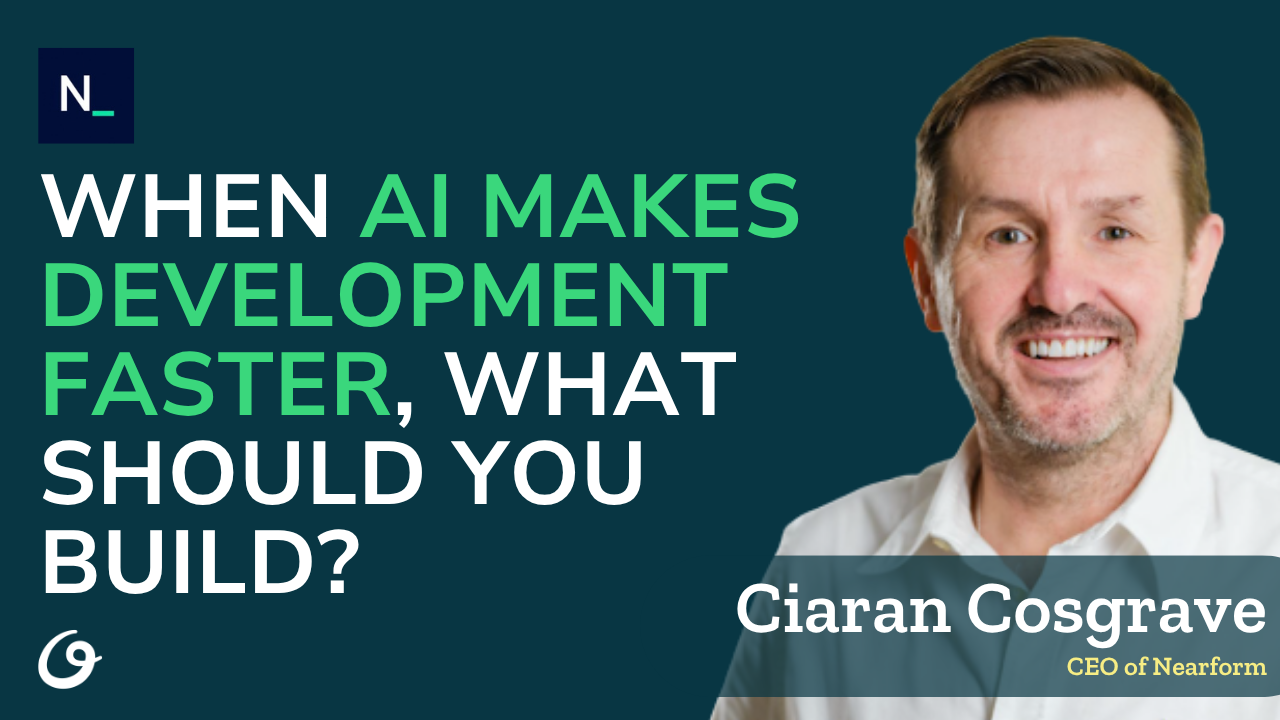
Ciaran Cosgrave, CEO of Nearform, a global AI-native engineering company for the enterprise. Before moving into entrepreneurship and technology, he spent the first decade of his career running refugee camps across Africa and Central America. Those experiences shaped how he thinks about resilience, problem-solving, and building teams.
In our conversation, we explore why Ciaran focuses on problems before technology, how AI software development is compressing months of prototyping into days and weeks, and why faster experimentation makes judgment even more important. We also get into the new challenge leaders face when teams can generate more ideas and prototypes than organizations can realistically absorb.
Subscribe


Key Takeaways
- Start with the problem, not the technology: Understanding the underlying problem and speaking with the people experiencing it creates a stronger foundation than chasing technology or quick financial returns.
- Knowing what to build remains difficult: AI can change how software gets built, but leaders still need judgment to determine which problems matter and what is worth creating.
- Faster prototypes can improve judgment: Moving from idea to prototype in days or weeks gives teams more opportunities to explore alternatives and test assumptions before committing to large investments.
- More experimentation requires better filtering: As testing ideas becomes faster and cheaper, leaders need mechanisms for deciding which prototypes deserve to move forward.
- Growth is becoming less dependent on headcount: AI is challenging the traditional services model where growing a business was closely tied to adding more people.
Additional Insights
- Resilience can come from unexpected experiences: Ciaran credits his years working in refugee camps with teaching him perseverance and giving him perspective when facing rejection and uncertainty.
- Great teams still matter: Ciaran emphasizes finding good people, helping them work together, and building strong teams around difficult problems.
- Luck belongs in the entrepreneurship story: Timing, advice, unexpected opportunities, and good fortune can play an important role even when successful founders later describe a more deliberate strategy.
- Nearform was built around open source and small, senior teams: The company was built on a belief in open technology and in smaller groups of experienced people creating greater impact.
- The transformation experts are being disrupted too: After helping companies navigate mobile, cloud, and ecommerce, Nearform now finds its own services business directly affected by AI.
Episode Highlights
00:00 – Solve Problems Before Chasing Money
Ciaran explains why he has always been more interested in solving meaningful problems than pursuing technology or quick financial returns.
02:32 – Guest Introduction: Ciaran Cosgrave
Meet Ciaran Cosgrave, CEO of Nearform, whose unconventional career began with a decade spent running refugee camps before moving into entrepreneurship and technology.
03:52 – From Refugee Camps to Technology
Ciaran shares how he spent the first ten years of his career working in refugee camps before entering technology.
05:46 – Giving His Early Career to Others
A teenage encounter with a technology entrepreneur inspired Ciaran to spend the early years of his career serving others and tackling difficult problems.
08:18 – Becoming an Entrepreneur by Accident
After struggling to enter traditional corporate roles, Ciaran found an opportunity in financial services and started building technology businesses.
11:45 – Focus on Problems, People, and a Little Luck
Ciaran explains why understanding the problem, finding great people, and acknowledging luck have shaped how he builds businesses.
15:43 – What Drew Ciaran to Nearform
Ciaran describes Nearform’s origins and its early belief in open-source technology, small senior teams, and software as a force for good.
21:03 – When the Transformation Experts Get Disrupted
After years of helping companies navigate digital transformation, Nearform now finds its own industry being reshaped by AI.
25:45 – Knowing What to Build Is Still Hard
Ciaran argues that judgment about what to build remains one of the biggest challenges for organizations using AI.
29:38 – From Months of Prototyping to Days and Weeks
AI-assisted development allows teams to move from ideas to prototypes much faster and examine more alternatives before committing.
33:20 – Making More Bets With Greater Optionality
Barry explores how cheaper experimentation allows teams to test multiple possibilities instead of placing one large bet.
36:06 – When Innovation Becomes the Bottleneck
Ciaran explains why organizations need stronger filtering mechanisms as teams generate and prototype more ideas.
39:18 – Turning AI’s Potential Into Reality
Ciaran shares his optimism about putting AI into production and using it to build new services and tackle difficult problems.
FAQs
Q1: How is AI changing software development and prototyping?
AI is compressing the time required to move from an idea to a working prototype. Ciaran says work that once required months of discovery and development can increasingly happen in days and weeks.
Q2: Why does judgment still matter when companies can build faster with AI?
Building faster does not determine what should be built. Companies still need to understand the problem, evaluate opportunities, and decide which products, services, or changes are worth pursuing.
Q3: How can faster prototyping improve business decisions?
Faster prototyping lets leaders see potential solutions earlier, compare alternatives, question assumptions, and test more bets before making larger commitments.
Q4: What leadership challenge does increased AI experimentation create?
When teams can generate and prototype more ideas, leaders can become overwhelmed by the volume of innovation. Organizations need better filtering mechanisms to decide which ideas should progress into production.
Q5: What did Ciaran Cosgrave learn from working in refugee camps?
Ciaran says the experience taught him perseverance and resilience and gave him perspective when dealing with rejection and uncertainty later in business.