
AI is changing the decisions boards and executive teams need to make about their businesses. Assessing the opportunities and risks requires leaders to understand what AI makes possible, how their organizations embrace change, and whether they have the talent to move forward.
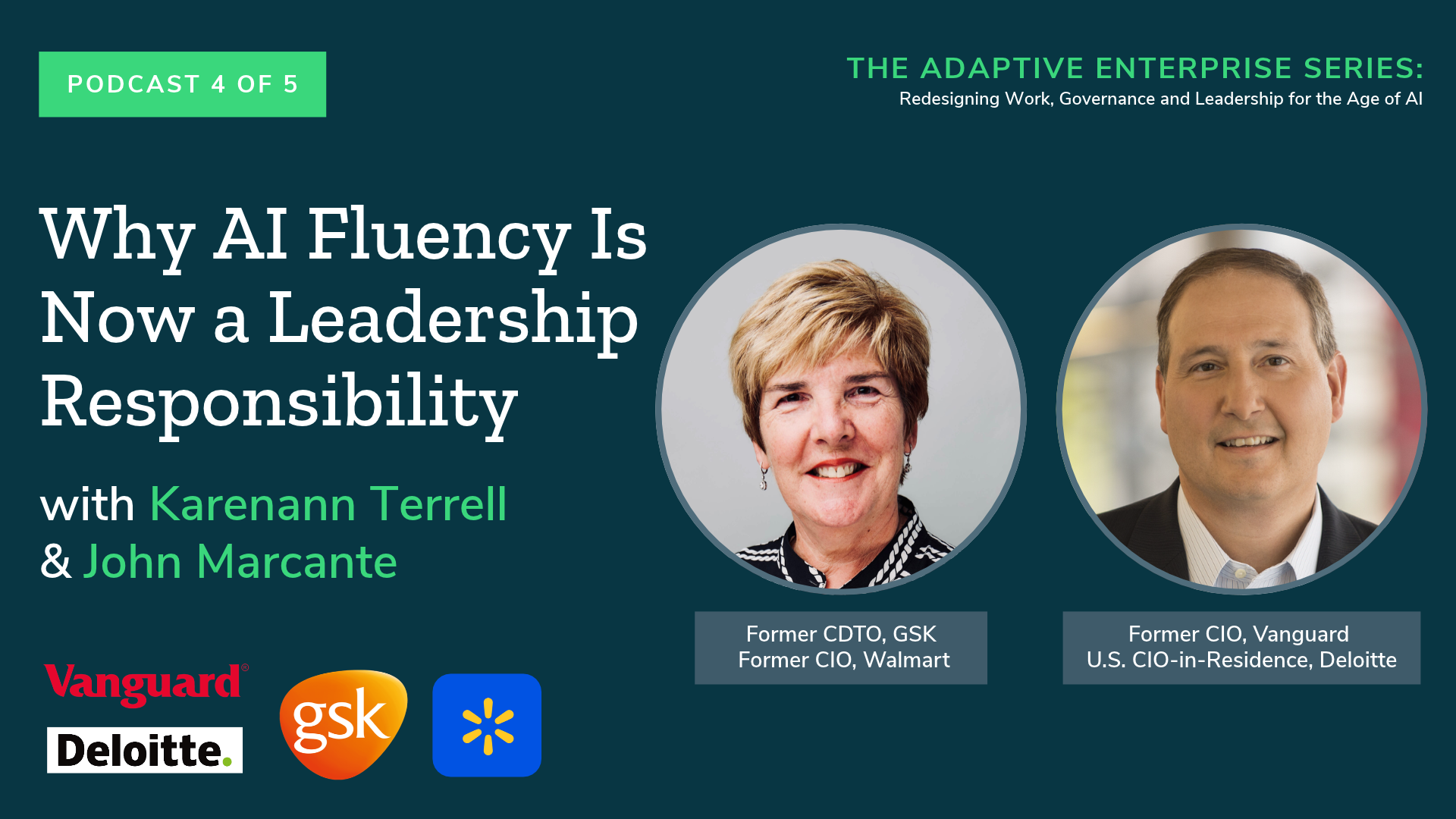
In this episode, Karenann Terrell, former Chief Digital and Technology Officer at GSK and former CIO of Walmart, joins John Marcante and me. Kat brings experience leading technology across industries and serving on corporate boards. John, former Global CIO of Vanguard and Deloitte’s U.S. CIO-in-Residence, brings his perspective on executive leadership and organizational transformation. Together, we explore business cases, leadership accountability, company culture, and reverse mentoring.
This is the fourth podcast in The Adaptive Enterprise, our five-part article and podcast series on redesigning work, governance, and leadership for the age of AI.
Subscribe


Key Takeaways
- Connect AI to the business strategy: Kat challenges leaders to move from presenting use cases to explaining the business case. AI priorities should support the specific outcomes the company is trying to achieve.
- Make AI fluency an executive responsibility: Understanding AI cannot sit entirely with a technology or AI leader. CEOs, boards, and business executives need enough understanding to assess opportunities, challenge proposals, and make informed decisions.
- Work with how your culture embraces change: Kat contrasts her experiences across retail, pharmaceuticals, and automotive. Leaders need to understand how change gains traction in their company when deciding how to introduce new ways of working.
- Align leadership around shared priorities: John emphasizes common goals, incentives, and rigorous prioritization. Competing executive agendas make it harder to redesign important business processes.
- Use reverse mentoring to develop both generations: Connecting senior leaders with colleagues who use AI regularly can build executive understanding while giving emerging talent exposure to business problems and leadership decisions.
Additional Insights
- Boards need more than one informed voice: Kat explains why relying on a single technology expert can limit a board’s ability to assess management’s proposals and challenge its thinking.
- Leadership vulnerability influences experimentation: John and Barry discuss how openly sharing what leaders are trying, struggling with, and learning can help others feel able to experiment.
- Learning needs protected time: Kat asks leaders to demonstrate their commitment to learning through their calendars. Staying current needs to be part of the job.
- Culture can evolve: John describes how Vanguard combined executive alignment with greater frontline empowerment as it changed how teams worked.
- Early-career development needs attention: As AI changes entry-level work, organizations need to consider how people will develop domain expertise, judgment, and the experience required for future leadership.
Episode Highlights
00:00 – Talent and Structure Reach the Boardroom
Kat opens with the importance of having the right leaders, technical talent, and organizational structure as markets change.
02:49 – What Boards Are Discussing About AI
Kat describes three recurring concerns: separating market signals from hype, assessing talent, and understanding AI’s implications for the business.
07:13 – Connecting AI to Meaningful Business Outcomes
John discusses the pressure to demonstrate returns and focus on the business opportunities that matter most.
09:03 – Bring the Business Case
Kat explores why companies move at different speeds and distinguishes productivity improvements from broader business reinvention.
16:00 – Leadership Roles and AI Accountability
Kat examines the relationship between technology and AI leadership roles, and why business executives need their own AI understanding.
22:30 – Leaders Need Firsthand Experience
Barry and John discuss how executives can use AI in their own work and create conditions for experimentation across the organization.
27:40 – How Company Culture Shapes Change
Kat compares how different organizations embrace change, while John shares Vanguard’s experience of combining leadership alignment with frontline empowerment.
30:54 – Align AI with Business Priorities
Kat explains why AI goals need to connect directly to strategy and introduces reverse mentoring as a way to build leadership capability.
33:34 – Keeping the Board Educated
John asks how boards stay current. Kat discusses practical learning, external perspectives, and the need for informed dialogue with management.
38:21 – Making Learning Visible
Barry shares examples of executive learning communities. Kat challenges leaders to show where learning appears on their calendars.
43:38 – Developing the Next Generation
John raises the changing shape of entry-level opportunities. Kat explores domain expertise, emerging career paths, and entrepreneurial experience.
50:56 – Reverse Mentoring as Everyday Practice
Kat explains how direct relationships between senior leaders and AI-fluent colleagues can support learning in both directions.
FAQs
Q1: Why is AI fluency a leadership responsibility?
Leaders make decisions about strategy, investment, risk, and talent. They need enough understanding of AI to assess its possibilities and limitations, challenge proposals, and connect new capabilities to business priorities.
Q2: What should boards ask about AI?
Kat emphasizes the business case, the leadership and talent required, and the opportunities and risks for the company. Boards also need to examine their own understanding so they can engage management in informed discussion.
Q3: How does company culture influence AI adoption?
Companies embrace change differently. Some rely on frontline experimentation, others on executive alignment or dedicated innovation teams. Kat argues that leaders should understand those patterns when introducing AI and redesigning work.
Q4: How can reverse mentoring help senior leaders learn about AI?
Senior leaders can work with colleagues who are further ahead in using AI. These relationships offer practical learning while giving emerging talent access to business context, domain knowledge, and leadership experience.
Q5: How can organizations develop talent as AI changes entry-level work?
John and Kat discuss the need to create opportunities for domain learning, mentoring, and practical experience as familiar tasks change. Reverse mentoring can contribute, but the wider challenge of developing future talent remains open.